

Quality for Execution: Know what every NCR does to delivery
A part fails inspection, and the work order still shows on time. Pelico ties the hold to every build it blocks, so quality and production act on it together.
What changes with Pelico
Results from customer deployments:
On-time delivery
+15%
Clear-to-build
+16%
Material coverage
+29%
Go live
12 wks
How one NCR can hold up a whole build

Quality and production run in separate systems
When an NCR puts a part on hold, how long until production knows the new delivery date?
Rework or scrap gets decided without the schedule
When a part fails inspection, do you know what the rework-or-scrap call does to the delivery date before you make it?
Quality holds hit builds already underway
Do you check for open NCRs before you release a work order?
CAPABILITIES
What Pelico gives quality and production teams
The Quality for Execution solution runs on Pelico's Manufacturing Orchestration Platform. It ties every quality exception in your QMS to the work orders and deliveries it affects, so you know what a hold does to the schedule while you can still act.
Made for: Quality Managers · Engineering and Quality Leads · Production Controllers · Production Planners · MRO Operations Managers · VPs of Operations
Quality exceptions ranked by delivery risk
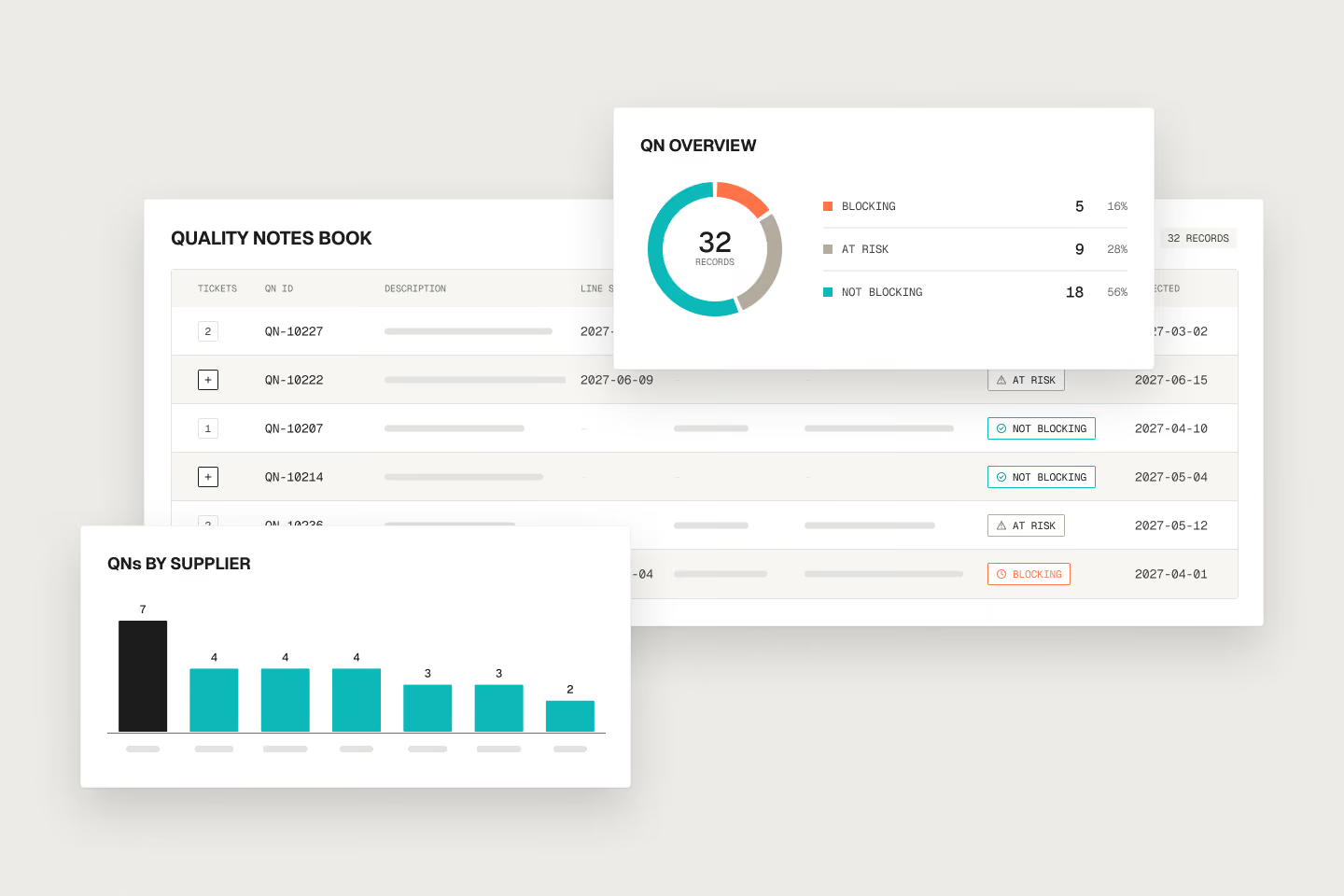
Link inspections, NCRs, and engineering and quality tickets to the work orders they hold up, so the ones blocking a delivery come first.
Rework or scrap, scored on cost and schedule
Each option scored against schedule slack, downstream OTD risk, and cost, with the reasoning shown. The operator makes the call.
Quality-aware clear-to-build
Open NCRs count in the release decision. A part on hold is flagged in the work order book before release, and NCR-driven shortages flow into the same recovery workflow as material ones.
Supplier quality signals
Quality notifications tied to the purchase orders they relate to, and fed into a supplier reliability index. Quality and delivery risk sit on the same supplier record.
AI built into every NCR
Pelico's AI agents follow each hold to the deliveries it puts at risk and help chase suppliers when it becomes a shortage, so planners spend their time on the fix, not the legwork.
FAQ
The QMS stays the system of record for NCRs, inspections, and corrective actions. An orchestration platform reads those exceptions and ties each one to the work orders, parts, and deliveries it affects in live production. Pelico doesn't replace the QMS; it tells production what each NCR does to the schedule.
Quality decides what happens to the part. Production control owns what it does to the schedule, and planning re-sequences around it. In Pelico, all three work the same NCR, tied to the work orders and delivery dates it touches, so nobody is working from a stale copy.
Score both options against the same three things: schedule slack on the order, downstream on-time delivery risk, and cost. Rework that eats the slack can cost more than scrapping the part and pulling a replacement. Pelico scores each option on live production data and shows its reasoning, and the operator makes the call.
Make clear-to-build quality-aware: check every part going into the order for open NCRs, not only stock. A part on hold makes the order not clear, whatever the stock says. Pelico flags it in the work order book before release and routes it into the same recovery workflow as a material shortage.
Hold the part, not the delivery
Ask how manufacturers use Pelico to clear quality holds without losing the delivery date, and what it would take in your plant.

