The platform to coordinate manufacturing operations in real time
Pelico is the Manufacturing Orchestration Platform for operations spread across plants and systems. It connects your data, maps every dependency, and helps teams act on what matters most.

TRUSTED BY




THE EXECUTION GAP
When operational reality hits, the plan breaks
A late part, a quality hold, a rate change. Four teams work the problem from six systems, and by the time anyone sees the full impact, it's too late. That's the execution gap: the space between the plan and what's actually happening.

The missing layer
Pelico closes the execution gap
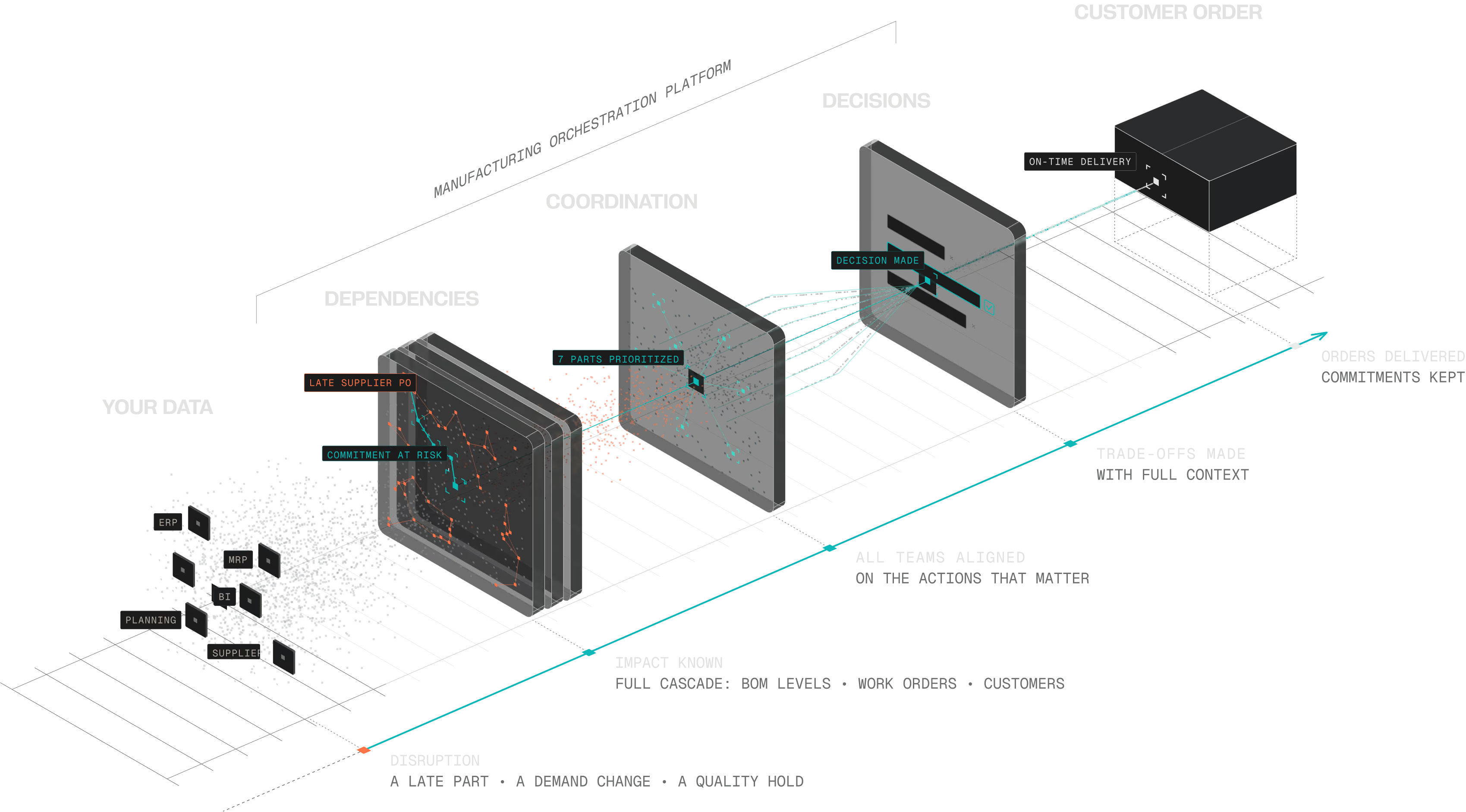
From your data to confident decisions in one connected flow
When execution is orchestrated, this is what changes
01
Your data
It starts with your existing data, fully under your control. ERP, MES, planning, quality. Fragmented, siloed, yours.
02
LIVE DEPENDENCIES
Pelico links every unit of supply to the demand it covers, across every BOM, order, supplier and site. When something changes, you see the root causes and the full impact.
03
Coordination Hub
One coordination space where teams know what to fix first, see the root causes, run simulations, and unblock the line. AI agents handle the legwork.
04
DECISIONS
Everyone sees what's at stake, what it costs, and which trade-off to make.

Commitments hold
Every part, work order, and supplier delivery in Pelico is tied to the customer order it serves.
Dependencies, simulations, and actions are all checked against that order's date, so when the date is at risk, it shows first.
Resilience you can measure
On-time delivery
+15%
MRO turnaround time
-42%
part shortages
-37%
productivity
+30%
IT LANDSCAPE
Where Pelico fits in your stack
Keep every system you already have. Pelico runs across them and coordinates the daily decisions none of them was built for, in the 0–90 day window where plans meet reality.
vs. ERP
SAP, Oracle, and Infor hold the records. Pelico runs on top and coordinates the daily decisions ERPs weren’t built to manage.
vs. APS
Planning systems optimize the plan and assume stability. Pelico optimizes execution when reality breaks it.
Vs. MES
MES and MOM software record and execute work at the machine and the line. Pelico arbitrates the trade-offs across supply, production, quality, and maintenance.
vs. bi
BI reports what happened. Pelico works on what happens next.
vs. data platforms
Data platforms harmonize your data. Pelico comes with the manufacturing logic built in.
INTEGRATIONS WE SUPPORT








Cleared for enterprise use
Enterprise-ready for regulated manufacturing, MRO, and aftermarket operations.

Open and interoperable
Native integration with SAP ECC and S/4HANA. Connects MES, planning, and quality systems, plus file and data lake feeds.
Secure and compliant
SOC 2 Type II, ISO 27001, and GDPR, with access controls, encryption in transit and at rest, and auditability.


Built for scale
Deployed in 25+ countries, across multi-site, multi-ERP operations and multi-tier supplier networks.
Production-proven AI
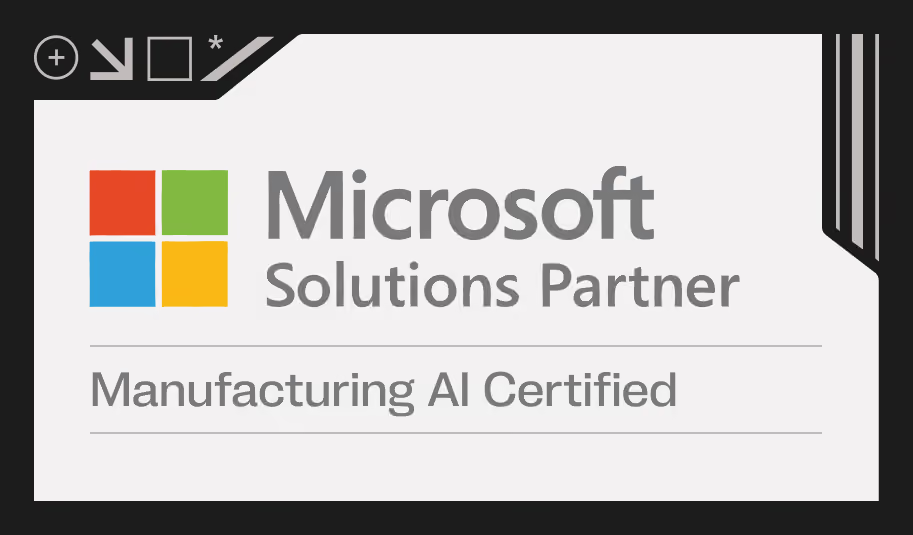
Certified for Manufacturing AI and running in live plants. Every write-back to a system of record is traced.
Light implementation
12 weeks to go live, around 20 hours of effort on the IT side, no rip-and-replace. Deploys in AWS, Azure, Google Cloud, or OVHcloud.
High reliability
Secure data pipelines, resilient architecture, and 24/7 observability to support always-on operations.
industries
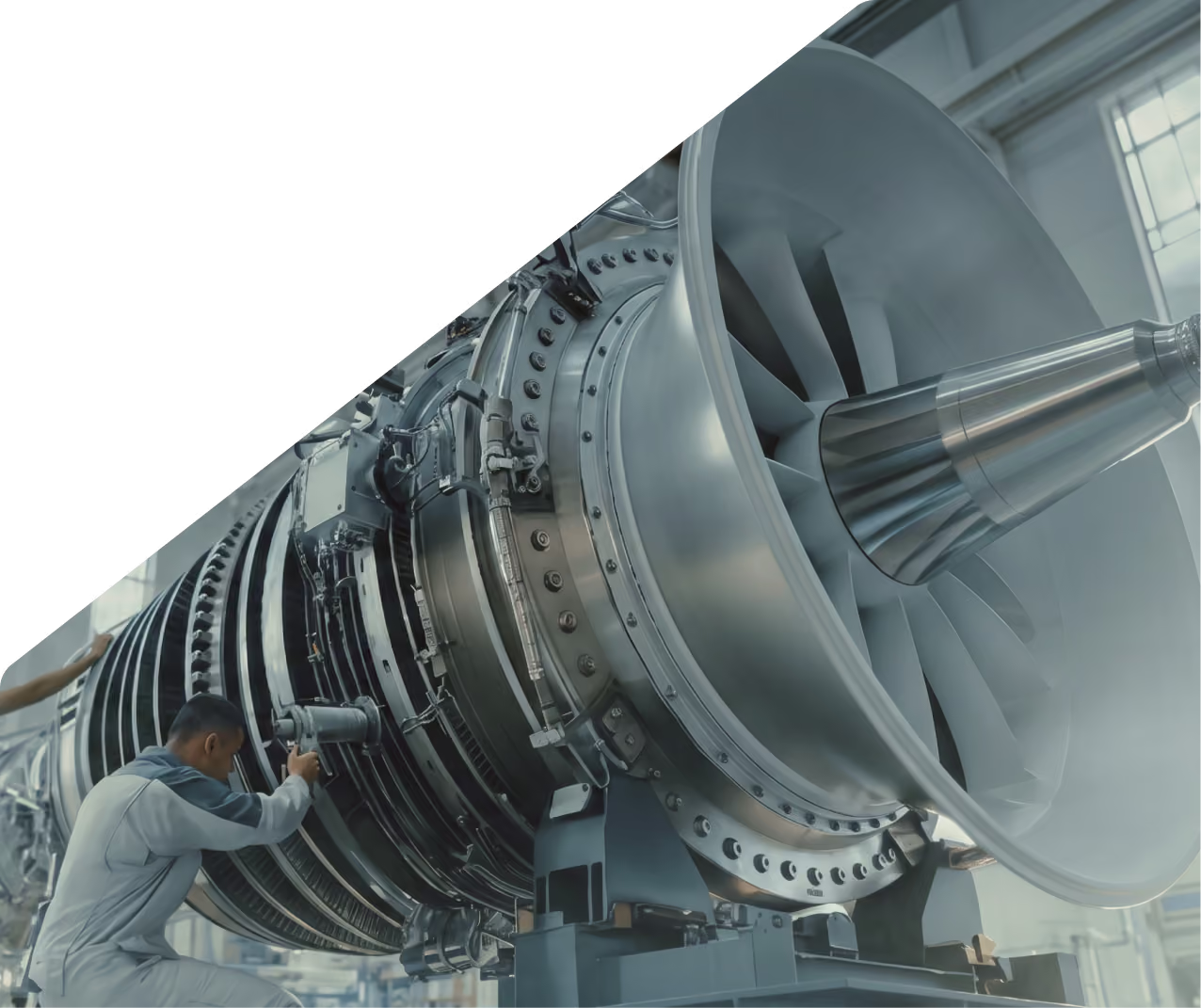
Built for complex discrete manufacturers and industrial maintenance providers





solutions
Find your starting point
FAQ
Pelico is a Manufacturing Orchestration Platform. Manufacturing operations management software and MES record and execute work at the plant and machine level. Pelico sits above them and coordinates the decisions across supply, production, quality, and maintenance when reality moves.
Planning systems build an optimized plan and assume it holds. Execution management software runs the 0–90 day window where it does not. Pelico is the execution layer, and most customers run both.
No. Pelico reads live data from your ERP — SAP ECC and S/4HANA through a native extractor, other sources through file and data lake ingestion. Then it pushes actions back into the ERP. APIs cover MES, planning, and quality systems. Transactional records stay where they are.
A data platform harmonizes your data and leaves the decision to you, because the manufacturing logic has to be built case by case. Pelico arrives with that logic in place: supply-to-demand pegging through every BOM level, live clear-to-build status, and the trace from a late part to the customer orders at risk.
Every plant and ERP feeds one model, so a part in one system is linked to the orders it covers in another.
Pelico has a Projection Engine built into the platform that pegs every unit of supply to the demand it covers, through every BOM level. When a purchase order slips, it recalculates the start of every work order consuming that part and the ship date of every customer order behind them, in one pass. You see which deliveries are at risk while there's still time to expedite, reallocate, or reschedule.
A generic copilot is prompted over a general model. Pelico's AI agents run on the platform's manufacturing logic and carry out defined steps. Nothing is written back to a system of record without approval, and every update is scoped and traced.
Around 20 hours in total, from one data and IT referent. They grant ERP access and handle the network side: IP allowlisting, VPN, and SSO. Pelico's team maps your data and sets up the daily refresh.
Yes. Pelico can run on premise, in your own Azure, AWS, or GCP tenant, or in government and sovereign clouds. Air-gapped environments are supported. An on-premise deployment has the same features as the cloud version, and you control the upgrade schedule.
See Pelico on an operation like yours
A 30-minute demo, set up for your industry. We'll show what's at risk, what to do about it, and how fast Pelico goes live.

