The Debrief: Why Response is the Real Execution Challenge (Microsoft AI Tour Paris)
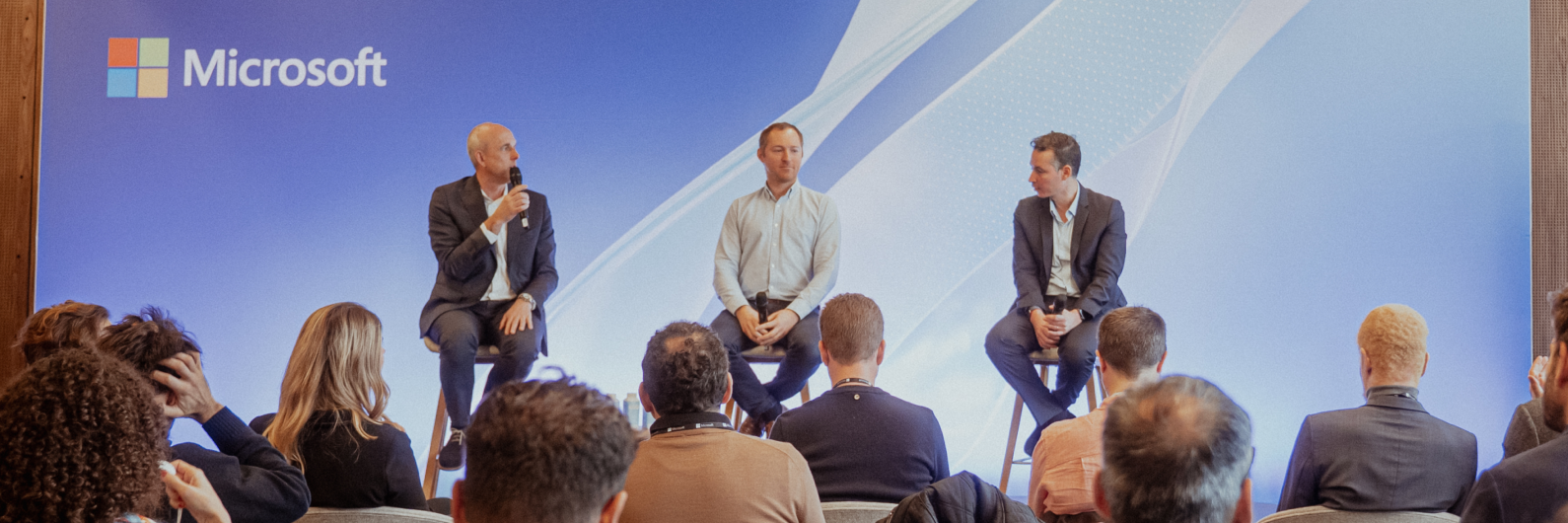
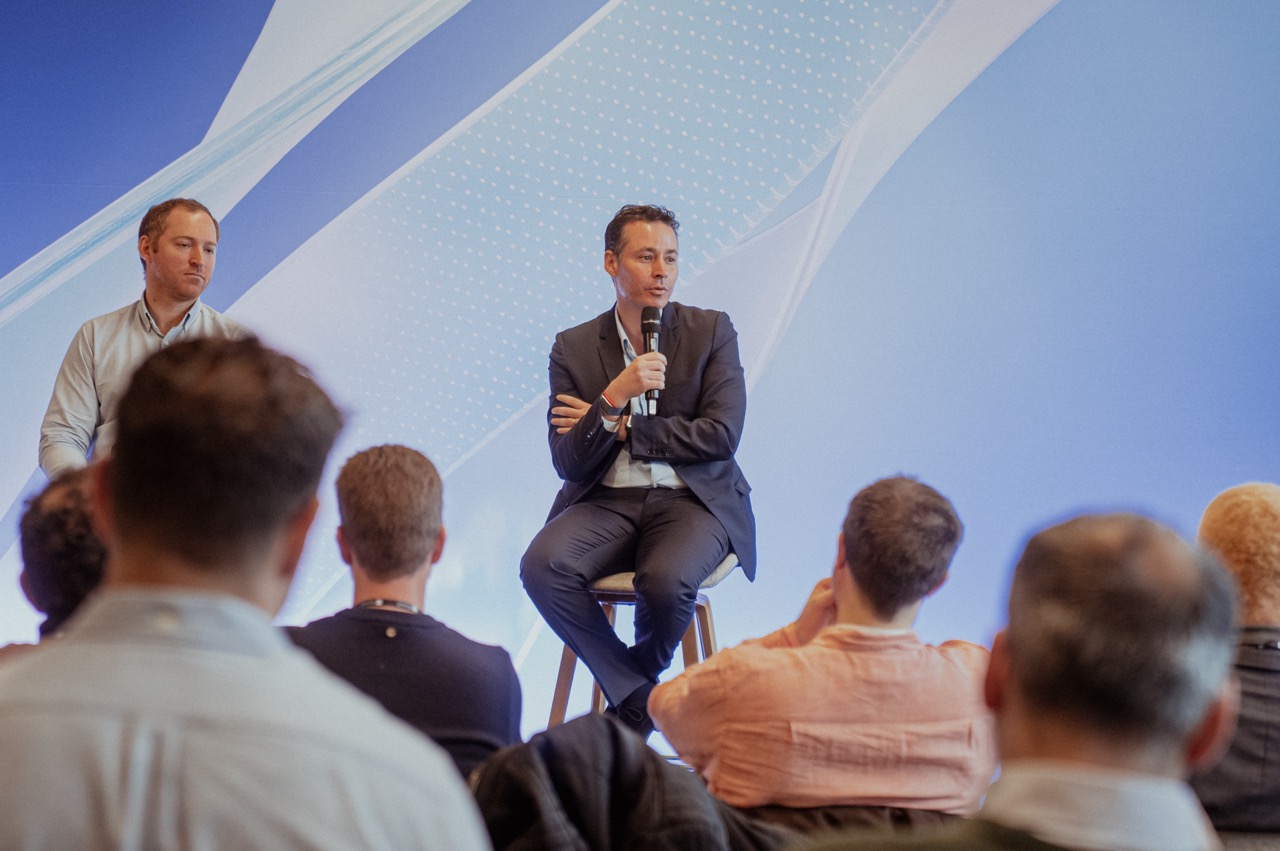
We were thrilled to have Pelico invited to join the "Digital Natives" panel at the Microsoft AI Tour in Paris this week. Our CEO, Tarik Benabdallah, took the stage alongside Xavier Perret, Microsoft EMEA Lead for Cloud & AI Data Platform, and Eric Simoni, Co-founder and Product Director at Shift Technology.
The discussion centered on a fundamental truth shared by all high-stakes industries: a "perfect plan" is an engineered intent that rarely survives its first ten minutes of physical reality. Whether managing a global supply chain or complex insurance claims, success is defined by how fast an organization can bridge the execution gap.
.png)
The 7:10 AM Reality Check
Tarik challenged the traditional obsession with long-term planning by highlighting a universal operational pain point: the start of the shift. While organizations spend weeks on a plan, Tarik noted that 10 minutes into a shift on any given day, a late part, a capacity shift, or a sudden change in data renders the plan obsolete.
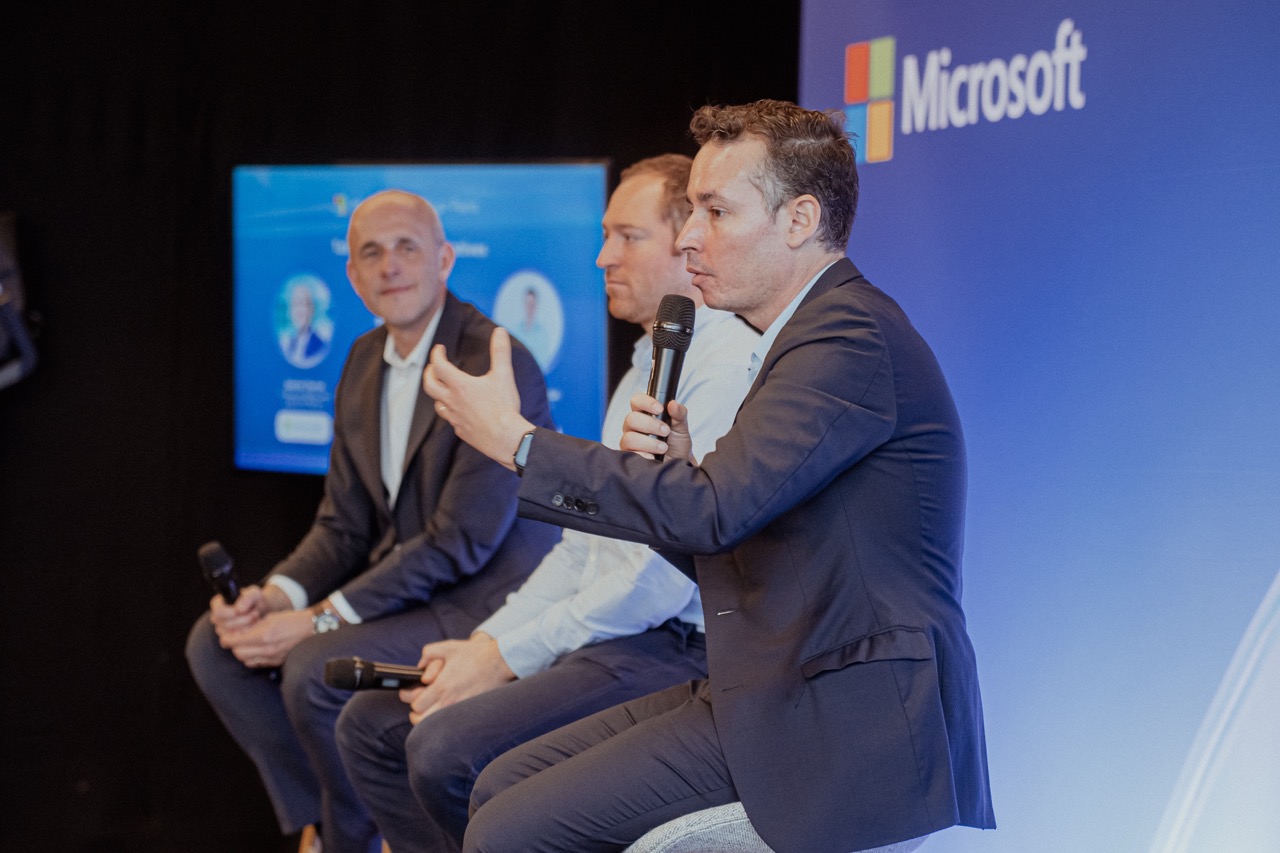
The real challenge isn’t planning. It’s responding fast to inevitable disruptions. — Tarik Benabdallah
This mismatch between the stable plan and the volatile reality of operations creates the execution gap. Because legacy systems are often designed to record transactions rather than manage high-velocity firefighting, leaders are increasingly looking to an orchestration layer to provide the real-time agility these systems lack.
Agentic AI: Built for the Million-Sided Puzzle
A major highlight of the panel was the role of specialized AI agents in managing environments where the volume of moving parts exceeds human capacity. Tarik used the world of MRO to illustrate this scale: finding a single replacement part for a grounded aircraft often requires navigating 6,000 suppliers and 5 million individual components.
When a disruption hits, the trade-offs are endless. A human cannot manually calculate the best path across millions of part-supplier combinations in seconds. This is known as combinatorial complexity—a mathematical impossibility for spreadsheets and manual coordination.
Specialized agents solve this puzzle instantly by analyzing historical performance, certifications, and stock levels to recommend recovery actions. This moves AI from a passive tool for visibility to an active engine for synchronized action across procurement, production, and quality teams.
Engineered Precision: Humans-in-the-Loop
In high-stakes environments, the cost of an error is absolute. Eric Sibony noted that while a chatbot hallucination is an inconvenience in some sectors, it cannot be permitted when it affects core operations.
“Agentic AI, with human-in-the-loop designs, provides a step-change in how much and how fast disruptions are dealt with by supply chain teams.” — Tarik Benabdallah
By keeping humans in control, orchestration ensures that AI agents guide teams through complex logic with full explainability.
Adoption Tip: Using "Internal Friction" to Drive Scale
A unique perspective on adoption emerged when Sibony shared Shift Technology’s strategy for scaling AI internally. Rather than pushing tools onto every employee simultaneously, they strategically limit access to certain teams, creating a sense of demand.
By positioning AI as a high-value resource rather than a mandate, they spark a natural pull from the workforce. This approach ensures that when teams do onboard, they are already convinced of the value, leading to higher long-term adoption and less cultural resistance.
Enterprise-Ready at Scale
As industrial AI moves beyond isolated pilots, the focus has shifted to enterprise-readiness at scale. Through a strategic partnership with Microsoft Azure, Pelico provides the governance necessary for these high-stakes environments—including specialized deployments on US GovCloud for Aerospace & Defense. This infrastructure allows manufacturers to stabilize their operations and address the execution gap across multi-plant networks in as little as 12 weeks.
Moving from Firefighting to Flow
The consensus in Paris was clear: the competitive leaders of 2030 will be defined by their ability to act on operational data in real-time today.
If you are ready to see how manufacturing orchestration can stabilize your operations, we invite you to explore our platform or apply for our AI Early Adopter Program.